 100% based in the USA
100% based in the USABusiness Class vs First Class – What's the Real Difference?
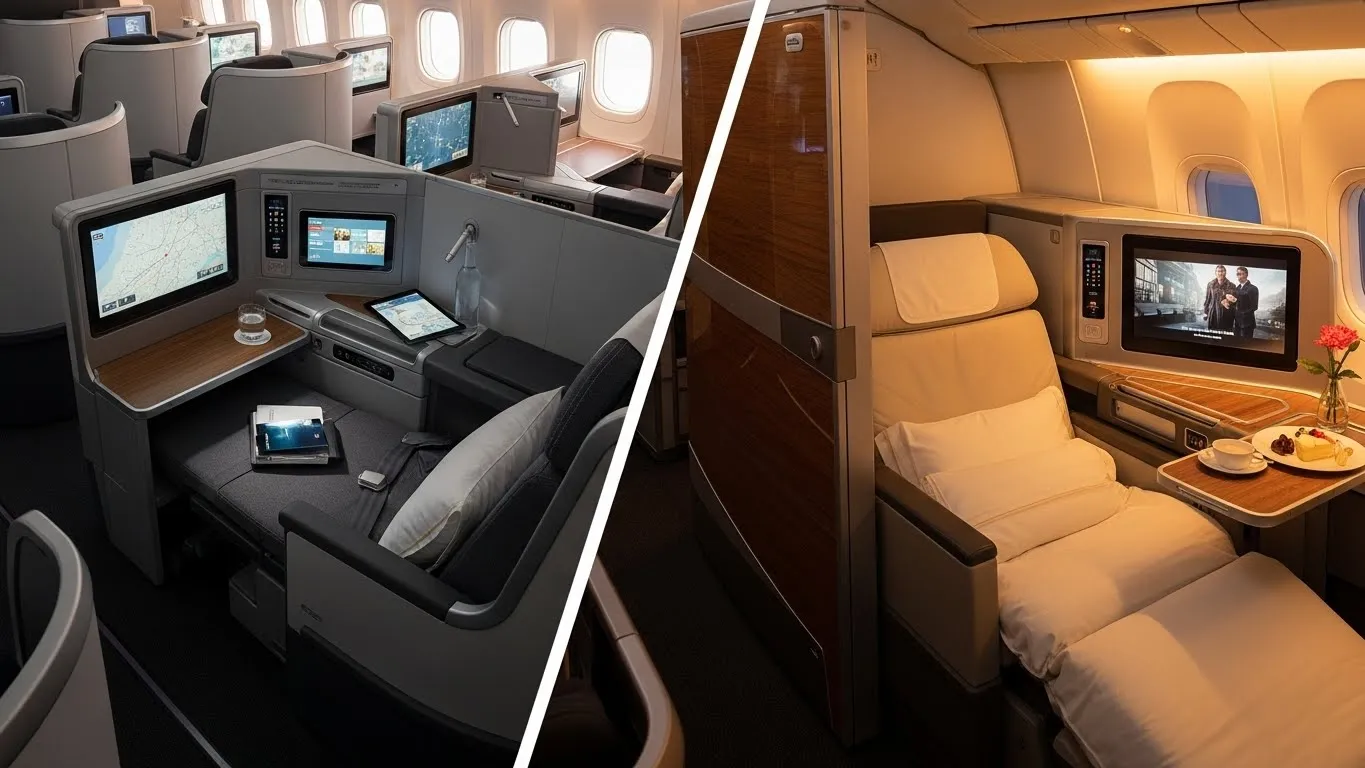
When booking a premium seat for an international flight, travelers often wonder what they're actually paying for. Beyond the price tag, what really separates business class vs first class? Sure, both offer luxury, but the experiences are vastly different.
Business class gives you lie-flat beds, quality meals, and lounge access - pretty impressive for long flights. First class takes everything several steps further. You get private suites with closing doors, flight attendants who know your preferences by heart, and restaurant-quality food at 35,000 feet. The champagne isn't just good - it's Dom Pérignon.
So is business class the same as first class? Not by a long shot. Think of it like comparing a well-equipped luxury sedan to a Rolls-Royce. The sedan has premium features and delivers comfort, but the Rolls-Royce operates on another level entirely. You get significantly more space, superior service, better amenities, and an experience that feels completely different. The main differences come down to seat design, service quality, airport perks, and whether the substantial price premium makes sense for your specific trip.
Many travelers avoid the economy but hesitate at first-class prices, which is understandable - those tickets can cost a small fortune. For long-haul flights to Europe or across the Pacific, choosing between business vs first class matters. Pay too much, and you've wasted thousands of dollars. Choose too little, and you might arrive exhausted, wishing you'd invested in better rest.
Comfort and Seating: How Business Class and First Class Really Compare
The physical differences start with the basics. In business class, seats typically measure 20-22 inches wide, with beds extending 6.5 to 7 feet - not enormous, but comfortable for most travelers. Newer aircraft usually provide direct aisle access for every passenger. On older planes, seat pitch ranges from 60 to 80 inches, which works well unless you're exceptionally tall.
First class takes things to another level. You're not just getting a seat - you're getting an actual suite with floor-to-ceiling walls. Some first-class suites span 50 square feet or more. Emirates and Singapore Airlines even offer double beds and separate seating areas. The bed is 7 feet long, comfortably accommodating even the tallest passengers.
Privacy is where first class vs business class cabins diverge most dramatically. Business class provides visual barriers - partition shells that shield you from aisle traffic. You'll still hear conversations from neighboring seats. First class eliminates this issue with solid doors that close for complete privacy.
Service, Dining, and Exclusivity in First Class vs Business Class
The service difference between first class vs business class becomes apparent the moment you board. First-class passengers receive champagne at their seats before departure. Business class passengers typically wait until after takeoff. These small touches set the tone for the entire flight.
The dining experience showcases one of the most dramatic differences:
Business class: Multi-course meals with 3-4 entrée choices, served in china with real silverware. Meals follow set schedules based on flight duration.
First class: À la carte menus with flexible timing and premium ingredients like caviar and Wagyu beef. You eat when you're hungry, not when it's convenient for the crew.
The food quality gap is substantial. Business class offers respectable cuisine, often designed by well-known chefs. First-class menus rival those of fine-dining restaurants, with some airlines employing onboard chefs who prepare dishes to order. You'll find Dom Pérignon and vintage wines from renowned vineyards as standard offerings.
Exclusivity extends beyond the aircraft itself. First-class tickets grant access to lounges that make standard business lounges look ordinary. These exclusive spaces feature private dining rooms with table service, actual spa treatments, and strict capacity limits that maintain a peaceful atmosphere. Lufthansa's First Class Terminal in Frankfurt even has dedicated security and departure gates.
Airport Experience: Lounges, Priority Services, and Ground Perks

The premium experience starts well before you board the plane. Both cabins offer priority check-in and expedited security access, cutting wait times from hours to minutes. The business class vs first class distinction at the airport is more subtle than the differences you'll find in the air.
Lounge access clearly separates the two categories. Business class passengers enter premium lounges with solid food selections, full bars, and shower facilities. These lounges serve their purpose but can get crowded. First-class passengers access invitation-only lounges with capacity restrictions and significantly better amenities - think private dining rooms, spa services, and dedicated staff.
Ground transportation reveals another first-class advantage. Many carriers provide complimentary chauffeured service for first-class passengers. British Airways offers this at London Heathrow, and Singapore Airlines extends the service at multiple airports worldwide. Business-class passengers typically receive discounted car service rates, at best.
Price, Value, and Who Should Choose Business Class or First Class
Now for the critical part: cost. The price gap between business vs first class can be shocking. A round-trip New York to London business class ticket runs $2,500 to $4,500. First class for the same route? Expect $8,000 to $15,000. On longer routes, the numbers climb fast - business class from LA to Dubai costs $4,000-$6,000, while first class exceeds $15,000 and can reach $30,000.
Upgrading from business to first means spending an additional $5,000 to $10,000 per ticket. What does that extra money buy? A larger suite, better food, premium champagne, and incredibly attentive service. Is it worth it? That depends entirely on your priorities and budget.
Smart timing can significantly impact your costs:
Book 2-5 months ahead: This window often yields the best business class pricing
Watch for flash sales: Airlines occasionally slash prices during slow periods
Leverage points wisely: Miles typically offer better value for business class upgrades
Check alternate airports: Smaller airports sometimes offer lower premium fares
Business class makes excellent sense for frequent international travelers. Companies usually cover it for business trips, and if you cross oceans regularly for work, business class delivers outstanding value. First class is better suited for special occasions - milestone anniversaries, bucket-list trips, or when the journey itself is part of the experience you're celebrating.
Flight length dramatically changes the value equation. The difference between business class and first class really matters on ultra-long-haul routes like New York to Singapore - 18 hours in the air. Spending an extra $8,000 for a six-hour flight to London might feel excessive. That same premium on an 18-hour marathon? Suddenly, it makes a lot more sense.
Ultimately, both business vs first class offer exceptional experiences compared to economy. Business class provides outstanding comfort and service at a price point many travelers can justify for special trips or frequent travel. First class delivers an unmatched experience for those who want absolute luxury and have the budget to match. The right choice depends on your specific circumstances, travel frequency, and what aspects of the flying experience matter most to you.
Ben Beck

First Class vs Business Class: Key Differences Guide
Learn the real difference between business class and first class. A full guide comparing comfort, service, and pricing to explain business vs first class flights.