 100% based out of United States
100% based out of United StatesBusiness Class Evolution: How Premium Travel Is Changing
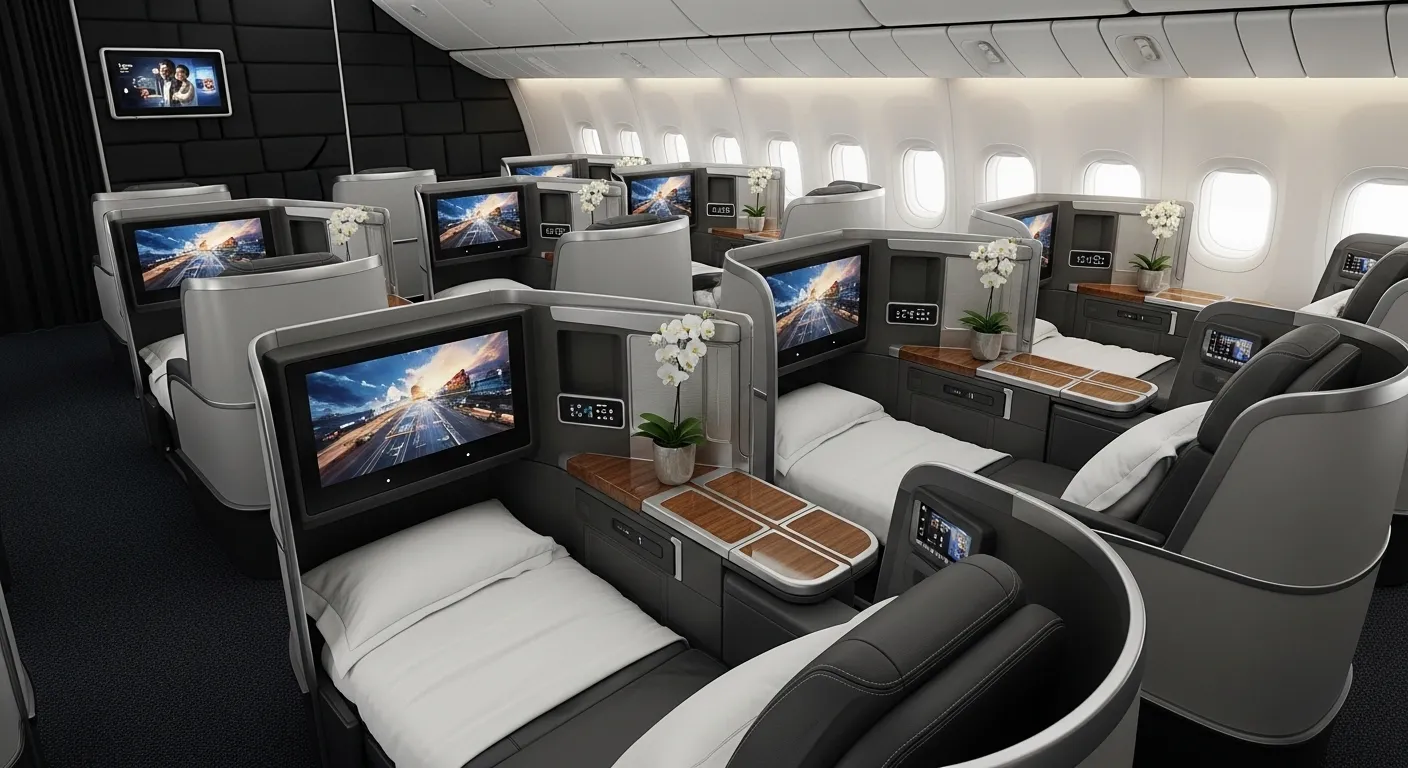
Not long ago, business class was little more than a slightly wider seat and a better meal. It existed somewhere between economy and first class - a practical upgrade for corporate travelers who needed to arrive rested, but hardly a destination experience in its own right. That's no longer the case. The business class evolution over the past two decades has been so dramatic that today's premium cabin barely resembles what it was in the early 2000s, and the pace of change is accelerating rather than slowing down.
Modern business-class passengers expect - and routinely receive - lie-flat beds, restaurant-quality dining curated by recognized chefs, private suites with sliding doors, high-speed Wi-Fi, spa-level lounge access, and personalized service increasingly driven by data and artificial intelligence. Understanding how this transformation happened, where it stands today, and where it's headed next is genuinely useful for anyone who flies premium regularly or is considering it for the first time.
The Origins of Business Class: From Economy Upgrade to Premium Experience
To appreciate how far business class has come, it helps to understand where it started. The cabin was introduced in the late 1970s and early 1980s primarily as a response to corporate demand - frequent business travelers needed something better than economy. Still, they didn't always justify the cost of first class. The early version was modest by today's standards: a bit more legroom, priority boarding, a slightly improved meal, and perhaps a wider seat with an empty middle seat next to it.
This is the foundation of how business class has changed - it began as a functional product and gradually transformed into a genuine luxury experience. The shift happened incrementally at first, driven by competition between major carriers and the growing expectations of frequent flyers. Reclining seats replaced upright ones. Dedicated check-in counters appeared. Lounge access became standard. Baggage allowances improved. Business class stopped being an economy upgrade and started becoming a premium product in its own right - one that, for many travelers on long international routes, has largely replaced first class as the preferred way to fly.
Seat Design and Cabin Comfort: The Heart of Business Class Evolution
If there's a single area where the evolution of business class travel is most visible, it's the seat. Early reclining seats gave way to angled lie-flat products in the late 1990s and early 2000s, which were then replaced by fully horizontal lie-flat beds - a development that genuinely changed what long-haul travel felt like. Arriving in Tokyo or London after an overnight flight, having actually slept in a flat bed, is a different experience entirely from arriving stiff and exhausted from a partially reclined seat.
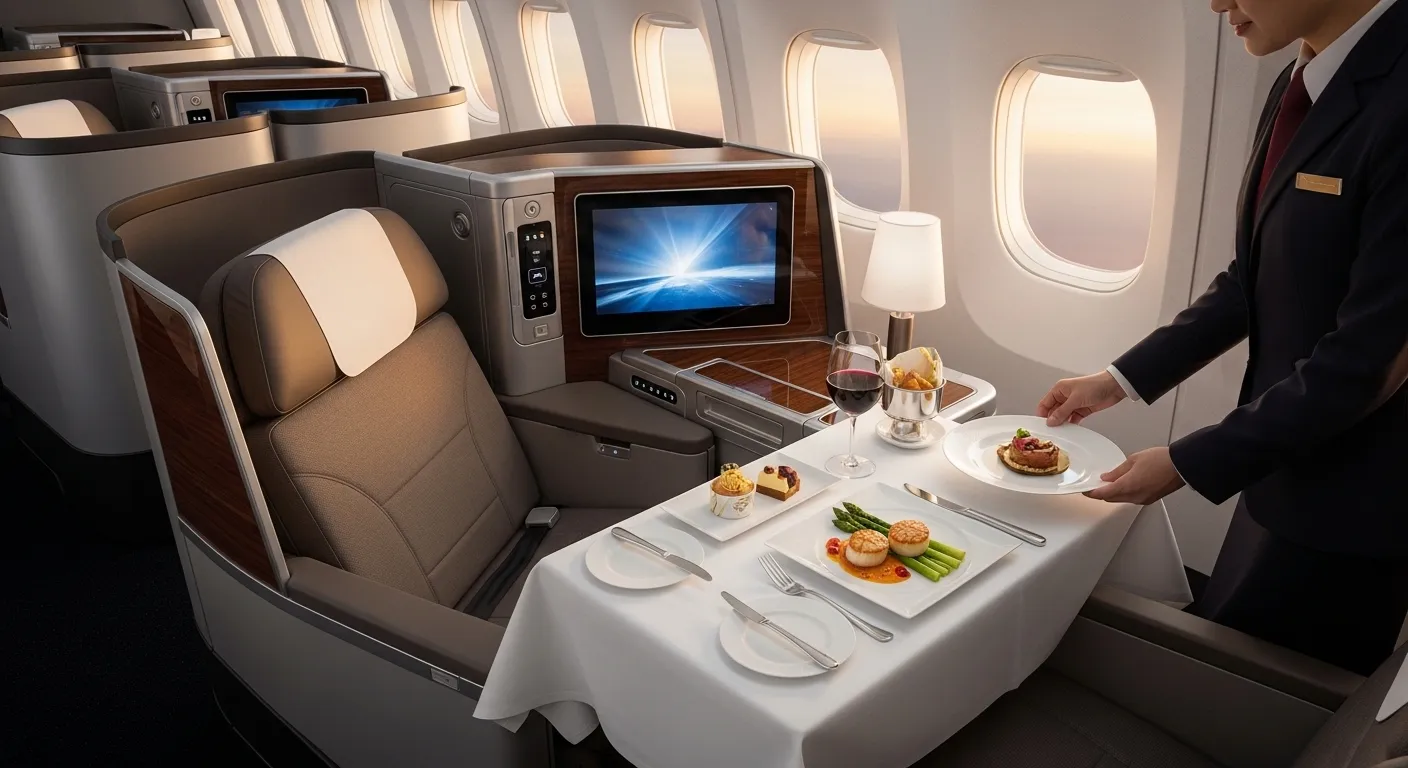
Today's seat design goes considerably further. Leading carriers now offer private suites with closing doors, window seats that don't require climbing over a neighbor, and ergonomic designs that account for lumbar support, neck positioning, and the different ways people use a seat over the course of a twelve-hour flight - sleeping, working, eating, and watching. These are the kinds of business class travel changes that have redefined passenger expectations across the industry.
The engineering behind modern business class seating is genuinely impressive. Configurations have moved away from traditional rows toward staggered, herringbone, and reverse herringbone layouts that give every passenger direct aisle access. Privacy partitions and personal storage have been integrated into the seat structure itself. Adjustable lighting, noise-reduction systems, built-in entertainment screens, and multiple charging options have become standard features rather than selling points. The seat is no longer just where you sit - it's the center of a designed personal environment.
Dining, Lounges, and Amenities: Premium Travel Reimagined
The premium travel evolution extends well beyond the seat. Dining in business class has undergone its own transformation, moving from serviceable airline food to genuinely ambitious culinary programs developed in partnership with Michelin-starred chefs and driven by the same farm-to-table sensibility that's reshaped fine dining on the ground. Singapore Airlines, Qatar Airways, and Japan Airlines have set a particularly high bar, with menus that change seasonally and wine programs overseen by dedicated sommeliers.
Lounge access has followed a similar trajectory. Today's flagship airline lounges - the kind attached to international business-class tickets at major hubs - are full-scale hospitality experiences with spa facilities, shower suites, à la carte dining, cocktail bars, private rest pods, and workspace environments that rival well-equipped coworking spaces. These aren't waiting rooms. They're deliberate extensions of the premium travel experience, designed to make the time before a flight feel as valuable as the flight itself.
The amenity kit has also evolved from a utilitarian pouch of basics into a curated collection that often collaborates with luxury skincare and lifestyle brands. Noise-canceling headphones, premium bedding, pajamas on overnight flights, and personalized service touches - like being addressed by name or having your meal preferences noted from a previous flight - have become part of what frequent business class travelers expect as a baseline.
Technology and Personalization: How Business Class Is Becoming Smarter
Technology is reshaping the business class trends 2026 conversation more than almost any other single factor. The integration of artificial intelligence, mobile applications, and data-driven personalization is changing what airlines can offer each passenger - and, in turn, passenger expectations.
The most visible layer of this shift is the in-seat entertainment and connectivity experience. High-speed Wi-Fi capable of supporting video calls and large file transfers has become standard on new aircraft. Entertainment systems feature massive high-resolution screens, extensive content libraries, and intuitive interfaces. But a deeper transformation is happening in how airlines use data to personalize the experience before, during, and after the flight.
AI-driven systems now allow airlines to anticipate passenger preferences - meal choices, seat positioning, preferred cabin temperature, even the timing of service - based on historical data. Mobile apps give passengers control over their experience from pre-departure lounge access to in-flight ordering. Interactive seat controls precisely manage lighting, massage functions, and recline positions. These business class trends 2026 developments represent a fundamental shift in the relationship between airline and passenger - from a standardized service model toward something that feels genuinely tailored.
The premium air travel trend toward wellness is particularly notable. Clean air filtration systems, mood lighting calibrated to reduce jet lag, ergonomic support designed in consultation with sleep scientists, and in-seat massage functions are all part of how airlines are responding to a passenger base that increasingly thinks about long-haul travel in terms of its physical and mental impact.
Comparing Business Class and First Class Evolution
One of the most significant dynamics in the business class vs first class evolution is the closing distance between the two cabins. First class was once categorically different - private suites, on-demand dining, dedicated ground transportation, and a level of personal service that no business-class product could match. That gap still exists, but it has narrowed considerably, and on many carriers it has become more a matter of degree than kind.
The evolution from business class vs first class has been driven partly by investment in business class and partly by strategic decisions by some airlines to eliminate standalone first-class cabins on certain routes, consolidating their premium offering into a single ultra-premium business product. The result is a business-class landscape that, at the high end, delivers experiences - closing-door suites, dine-on-demand menus, dedicated lounges with spa services - that would have been considered first-class features a decade ago.
The remaining differences tend to cluster around physical space (first-class suites are still larger), the depth of personalization (first-class cabin crew-to-passenger ratios remain higher), the exclusivity of lounge access, and the quality ceiling of food and beverage programs. Business class has become a competitive environment even for luxury-focused travelers - and that competition ultimately benefits passengers.
Future Trends in Business Class Travel: What to Expect by 2026
The future of premium travel is being shaped by a combination of technological capability, shifting passenger values, and competitive pressure between carriers. Several themes are emerging clearly as defining forces for the next few years.
Sustainability is one of them. Passengers are increasingly attentive to the environmental footprint of their travel, and airlines are responding with sustainable materials in cabin interiors, plant-based menu options, reduced single-use plastics in amenity kits, and investment in sustainable aviation fuel. The future of business class will be shaped in part by how successfully airlines integrate genuine sustainability commitments into a product that has traditionally been defined by abundance.
Wellness will continue to drive seat and service design. The science of sleep, circadian rhythm management, nutrition at altitude, and stress reduction is being taken seriously by airlines investing in next-generation cabin products. Expect more sophisticated lighting systems, better air quality management, improved ergonomics, and expanded wellness programming in lounges.
Personalization will deepen. As AI tools become more capable and passenger data becomes richer, the ability to deliver a truly individualized experience - one that remembers your preferences, anticipates your needs, and adapts in real time - will become a meaningful differentiator between carriers.
How Travelers Can Benefit from Business Class Evolution
Understanding the evolution of business class travel is useful, not just interesting. The improvements happening across seating, dining, technology, and lounge infrastructure mean that the gap between carriers is wider than it used to be - and choosing the right airline for a given route matters more than it once did. Knowing how premium travel is changing helps you ask better questions when comparing fares: not just what the price is, but what seat configuration is on the specific aircraft, which lounge is available at your departure airport, and what the meal service actually looks like in practice.
Loyalty programs remain one of the best tools for accessing premium cabins at reduced cost, and the evolution of business class has made the points value of a business class redemption significantly higher than it was when the product was less differentiated from economy. Booking strategically - with flexible dates, fare alerts, and awareness of when airlines typically release award availability - remains the most reliable path to flying premium without paying the highest published fares.
The business-class evolution is ongoing, and the direction of travel is clear: more privacy, more personalization, better technology, and a more holistic approach to passenger well-being. For frequent travelers, staying informed about what the best carriers are delivering right now is one of the most valuable things you can do before your next long-haul booking.
Anthony Cherkas

Business Class Evolution: Trends for 2026
Explore the evolution of business class travel, business class trends 2026, and how premium travel is changing in the future of premium air travel.